
Ashwagandha: a complete guide

🎯 Quick verdict
If you need energy, focus and protection from stress during the day, choose KSM-66 at a dosage of 600 mg. If you suffer from insomnia and night anxiety, your choice is Sensoril (125-250 mg in the evening). Take courses for 8-12 weeks with a break of 2-4 weeks.
What is ashwagandha and why is everyone talking about it?
Ashwagandha (Withania somnifera) is the flagship plant of Ayurvedic medicine, with a history of use dating back over 3000 years. Translated from Sanskrit, the name means “the smell of a horse,” which alludes to the traditional promise of giving a person “horse” strength and endurance.
Today, ashwagandha is officially recognized as a powerful adaptogen - a substance that helps the body adapt to stress without causing addiction. It is one of the most researched plant extracts in the world.
How ashwagandha breaks the stress mechanism: scientific analysis
When we are faced with chronic stress, the adrenal glands continuously release cortisol. High cortisol destroys muscles, accumulates belly fat, suppresses the immune system and “burns out” the nervous system.
1. Direct cortisol suppression
Meta-analysis showed a decrease in cortisol by 11-32% over 60 days. This is comparable to prescription anxiolytics, but without the side effects.
2. Activation of the GABA system
Withanolides bind to GABA receptors, reducing excessive neuronal activity. The result is calmness without inhibition.
3. Reduced inflammation
Ashwagandha reduces levels of C-reactive protein (CRP), a major marker of inflammation. Less inflammation = less fatigue and pain.
4. Thyroid support
Gently stimulates the production of hormones T3 and T4, helping with latent hypothyroidism. Contraindicated for hyperthyroidism!
Extract Battle: KSM-66 vs Sensoril
Raw root powder contains only 1-1.5% withanolides - this is useless. There are two leaders on the market:
KSM-66 - daytime adaptogen
The most studied extract in the world (24+ studies). Standardization: 5% withanolides. Only the root.
- Dosage: 300-600 mg in the morning and/or lunch
- Effect:energy, focus, memory, testosterone, libido
- For whom:people who need to be productive under pressure
Sensoril - night calmer
Mega concentration: 10% withanolides. Root + leaves. Powerful sedative effect.
- Dosage: 125-250 mg in the evening 1-2 hours before bedtime
- Effect:deep relaxation, anti-anxiety effect
- For whom:those suffering from insomnia and night anxiety
How to take it correctly: dosages and courses
Dosing
- KSM-66: Start with 300 mg in the morning. If necessary, +300 mg at lunch. Maximum - 1000 mg/day
- Sensoril: 125-250 mg in the evening during dinner or an hour before bed
Course duration
Optimal: 8-12 weeks. Adaptogens have a cumulative effect - full strength by the 4th week. This is a marathon, not a sprint.
Why do you need a break?
After the course there is a break of 2-4 weeks. The body gets used to the stimulation of GABA receptors, a break returns sensitivity.
What to combine with?
- Magnesium glycinate (evening) - enhances relaxation and sleep
- L-Theanine (daytime) - calm concentration without anxiety
- Omega-3 - reduces inflammation
- Vitamin D3 - synergy for immunity
Take with fatty foods - withanolides are fat soluble.
Contraindications
Absolute contraindications
- Hyperthyroidism - stimulates the production of T4, dangerous with increased function
- Pregnancy and lactation - may cause uterine contractions
- Autoimmune diseases - can aggravate MS, lupus, rheumatoid arthritis
Carefully combine with:
- Hypnotics and tranquilizers - mutual reinforcement to the point of dangerous drowsiness
- Thyroid medications—may change dosage requirements
- Immunosuppressants - ashwagandha stimulates the immune system
Novird expert summary
Don't look for "just ashwagandha." The label must contain KSM-66 or Sensoril.
For daytime stress: KSM-66, 600 mg, divided into two doses.
For insomnia: Sensoril, 125 mg one hour before bedtime.
Golden Rule: Give ashwagandha 4-6 weeks before evaluating results. And don’t forget about breaks between courses!
| KSM-66 | Sensoril | Criterion | Raw powder |
|---|---|---|---|
| Root only | Root + leaves | Part used | Chopped root |
| 5% | 10% | Withanolides | 1-1.5% |
| 300-600 mg/day | 125-250 mg/day | Working dosage | 3000-5000 mg/day |
| Morning/afternoon | Evening | Best appointment time | During the day |
| Energy, focus, sport | Deep sleep, panic relief | Main Focus | Weak effect |
| 24+ studies | good | Scientific base | Minimum |
| ★★★★★ BEST | ★★★★☆ For sleep | Recommendation | ★★☆☆☆ No |
← Прокрутите таблицу вправо →
Recommended products
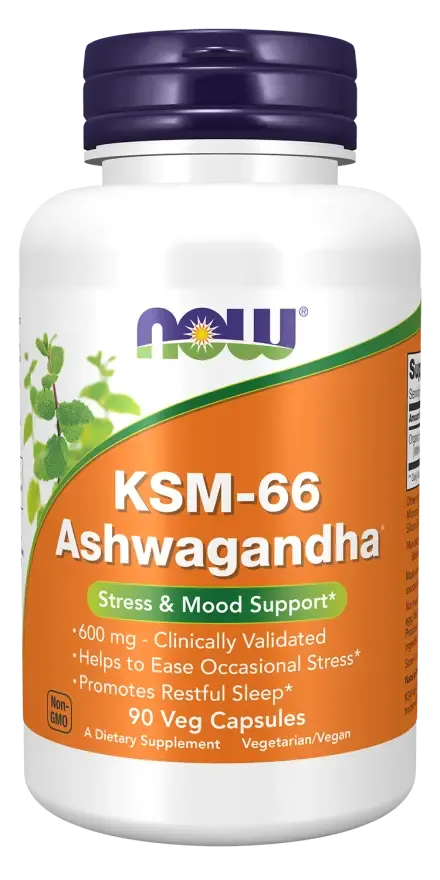
NOW Foods
Ashwagandha KSM-66 (NOW Foods)
Standardized KSM-66 ashwagandha extract, 600 mg. Reduces cortisol by 27%.
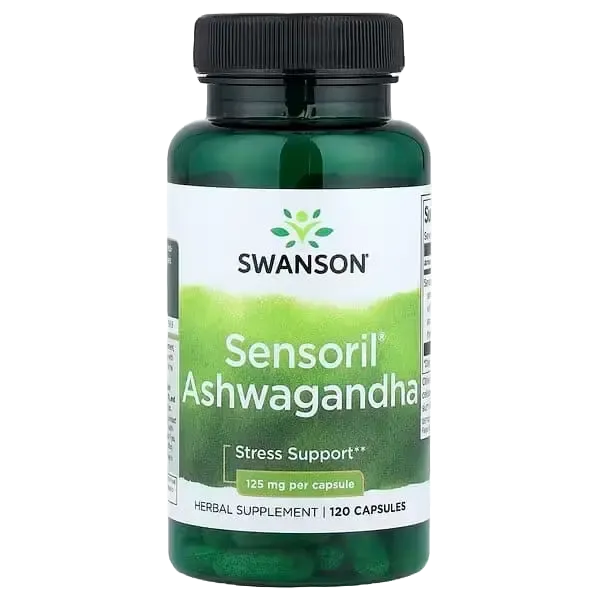
Swanson
Swanson Sensoril Ashwagandha 125 mg
Sensoril extract (root + leaf), standardized to 10% withanolides — higher than KSM-66. Strong calming effect, especially for evening and sleep. Low dose.
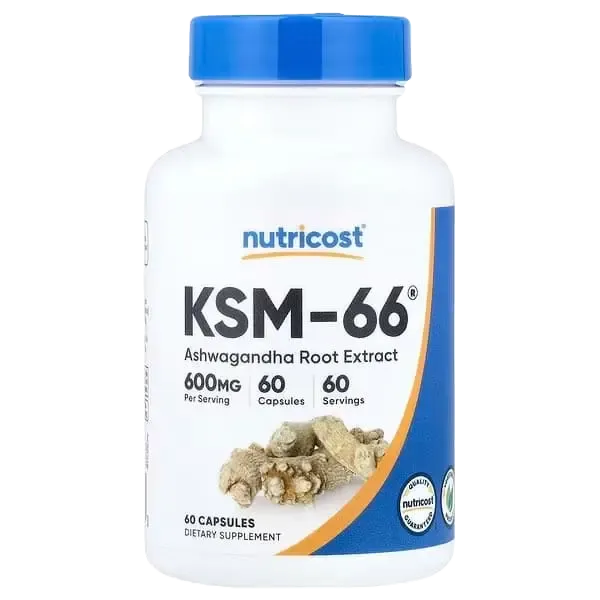
Nutricost
Nutricost KSM-66 Ashwagandha 600 mg
KSM-66 in clinical 600 mg dose — this exact dose reduced cortisol by 27.9% in studies. Root extract only, no fillers. Great price.
Frequently asked questions
What dose of ashwagandha is needed?↓
How long until ashwagandha starts working?↓
When is it best to take ashwagandha?↓
Can you take ashwagandha continuously?↓
Who should not take ashwagandha?↓
Sources and studies
Related articles
Iron: how to take it correctly and not cause harm
Iron is a double-edged sword. Deficiency = fatigue, excess = toxicity. Complete guide to forms and doses.
The best nootropics : what really improves memory
We analyze nootropics with an evidence base: Omega-3 DHA, Lion's Mane, Creatine, L-Theanine and Alpha-GPC.
Magnesium for the heart: why cardiologists recommend taurate
Magnesium taurate is the optimal form for the cardiovascular system. Taurine + magnesium = double heart protection.