
Magnesium for the heart: why cardiologists recommend taurate

🎯 Quick verdict
Magnesium taurate is the best form for the cardiovascular system. Taurine stabilizes heart rate, magnesium relaxes blood vessels. Together they reduce the pressure by 3-5 mm Hg. Dose: 200-400 mg elemental Mg. An alternative is orotate (popular in European cardiology). Oxide and citrate are not for the heart.
Why cardiologists are increasingly recommending magnesium
The heart is the most magnesium-dependent muscle in the body. Each contraction requires a precise balance of magnesium and calcium: calcium contracts muscle fibers, magnesium relaxes them. Without enough magnesium, the heart cannot relax properly between beats.
Meta-analysis of 40 prospective cohort studies (more than 1 million participants): Magnesium deficiency is associated with a 30-40% increased risk of cardiovascular diseaseincluding heart attack, stroke and sudden cardiac death.
What magnesium does for the heart
- Relaxes blood vessels - magnesium blocks calcium channels in the smooth muscles of blood vessels. Result: blood vessels dilate, pressure decreases
- Stabilizes the rhythm - magnesium regulates potassium and calcium channels of cardiomyocytes. Deficiency = arrhythmias, extrasystoles, fibrillation
- Reduces platelet aggregation - mild antithrombotic effect
- Improves myocardial energy - magnesium is needed for the production of ATP (together with CoQ10)
- Reduces inflammation - C-reactive protein falls when the deficiency is replenished
Why taurate
Magnesium taurate is a compound of magnesium with the amino acid taurine. This is not a random combination. Taurine is one of the most important amino acids for the heart:
- Stabilizes cardiomyocyte membranes - protects against electrical instability
- Regulates calcium channels - antiarrhythmic effect that complements the action of magnesium
- Reduces blood pressure - meta-analysis: systolic by 3-4 mm Hg, diastolic by 2-3 mm
- Antioxidant - protects cardiac tissue from oxidative stress
- Osmoregulator - maintains the electrolyte balance of cardiac cells
Magnesium + taurine = synergy: both components work on the heart, enhancing each other’s effect.
Acetyl taurate - the next generation
Magnesium acetyl taurate is a modified form that, in animal studies, penetrates the blood-brain barrier better. Potentially beneficial for both the heart and brain (reducing anxiety). But high-quality human data is not yet enough.
Alternative: magnesium orotate
Magnesium orotate (Magnerot) is popular in European cardiology. Orotic acid improves myocardial energy metabolism and may promote cardiac tissue regeneration.
- MACH Study (2009): Magnesium orotate reduced mortality in severe heart failure
- Used as maintenance therapy for arrhythmias
- Minus: Low percentage of elemental magnesium (~7%), large doses required
Dosages for the heart
- Prevention:200 mg elemental Mg (as taurate) per day
- Hypertension: 300-400 mg/day, divided into 2 doses (morning + evening)
- Arrhythmias/extrasystoles: 300-400 mg/day (discuss with a cardiologist)
- With CoQ10: Great combination - magnesium for rhythm, CoQ10 for energy
- With Omega-3:Magnesium for blood pressure + EPA for triglycerides
For whom magnesium is especially important for the heart
- Hypertensive patients - magnesium complements antihypertensive drugs
- People with extrasystoles - often the cause is magnesium/potassium deficiency
- Taking diuretics - diuretics wash away magnesium and potassium
- Diabetics - insulin resistance increases magnesium loss
- People under stress - cortisol washes away magnesium
Security
- Kidney failure:With reduced kidney function, magnesium accumulates - only under the supervision of a doctor and the level of Mg in the blood
- AV blockade: Magnesium can slow down conduction - contraindicated for II-III degree blockades
- With antihypertensives:May increase the decrease in blood pressure - monitor
Resume from Novird
- For the heart:Magnesium taurate is the best form (Mg + taurine synergy)
- Dose: 200-400 mg/day elemental Mg
- Combo for the heart: Taurat + CoQ10 ubiquinol + Omega-3 EPA
Important: Magnesium is a support and not a replacement for cardiac treatment. If you have been diagnosed with arrhythmias, hypertension or heart failure, discuss taking magnesium with your cardiologist.
| Dose | Form | Rhythm | Pressure | For the heart | Recommendation |
|---|---|---|---|---|---|
| 200-400 mg Mg | Taurat | Stabilizes | Reduces (Mg + taurine) | ★★★★★ | BEST FOR THE HEART |
| 200-400 mg Mg | Orotate | Supports | Moderately | ★★★★☆ | European standard |
| 200-400 mg Mg | Glycinate | Indirectly | Weak (through sleep) | ★★★☆☆ | Better for sleep |
| 200-300 mg Mg | Citrate | No data | Weak | ★★★☆☆ | Budget general |
| We do not recommend | Oxide | No | No | ★☆☆☆☆ | Useless |
← Прокрутите таблицу вправо →
Recommended products

Cardiovascular Research
Cardiovascular Research Magnesium Taurate
Magnesium taurate by Cardiovascular Research — recommended by cardiologists for the heart. Helps with palpitations, arrhythmia, ectopic beats (PVC/PAC), lowers blood pressure and heart rate.
KAL
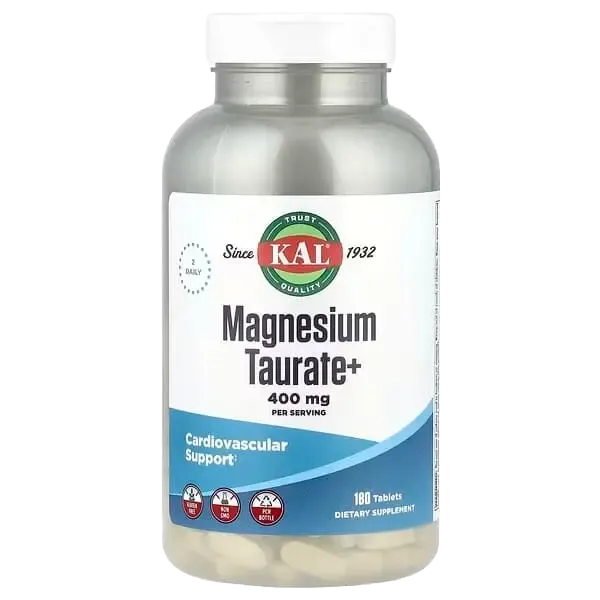
KAL Magnesium Taurate+
Magnesium taurate — gentle form for relaxation and nervous system. Calm sleep, less muscle tension, doesn't irritate stomach. 50000+ reviews.
Sources and studies
Related articles
Iron: how to take it correctly and not cause harm
Iron is a double-edged sword. Deficiency = fatigue, excess = toxicity. Complete guide to forms and doses.
The best nootropics : what really improves memory
We analyze nootropics with an evidence base: Omega-3 DHA, Lion's Mane, Creatine, L-Theanine and Alpha-GPC.
Best Omega-3 Fish Oil Supplements
Omega-3 is one of the few supplements with an ironclad evidence base. The best fish oils.