CoQ10: ubiquinol vs ubiquinone - which form to choose
🎯 Quick verdict
Up to 35 years - ubiquinone 100 mg (cheaper, the body converts it itself). After 35-40 - only ubiquinol (active form, absorbed 3-8 times better). For statins, ubiquinol 200-300 mg is required. Take with fatty foods.
CoQ10: Why shape matters
Coenzyme Q10 exists in the body in two forms, which constantly transform into each other: ubiquinone (oxidized) and ubiquinol (reduced). These are not marketing names - these are two different chemical states of one molecule. And the difference between the two is critical to how much benefit you'll actually get from the supplement.
Most people buy CoQ10 without thinking about the form - and lose up to 80% effectiveness. Let's figure out why.
Ubiquinone: inactive form
Ubiquinone is an oxidized form of CoQ10. This is what is sold in most cheap supplements. The label usually simply says “Coenzyme Q10” or “CoQ10” without further details.
How it works in the body
For ubiquinone to start working, the body mustconvert it into ubiquinol. This process occurs in the liver and other tissues with the help of special enzymes (NADH-dependent reductase). In young healthy people, conversion works normally.
Problem
With age, the activity of conversion enzymes decreases. After 40 years, the body converts ubiquinone to ubiquinol worse and worse. And with heart disease, diabetes and taking statins, this ability drops even more.
- Bioavailability:basic (taken as 1x)
- Conversion needed: yes
- Suitable for:young people under 35 in normal health
- Price:affordable
Ubiquinol: active form
Ubiquinol is a reconstituted, ready-to-use form. The body does not need to waste resources on conversion - ubiquinol is immediately incorporated into the mitochondria and begins to produce energy.
Why is it absorbed better
Pharmacokinetics studies show that ubiquinol is absorbed 3-8 times better than ubiquinone. This means: 100 mg of ubiquinol gives the same level of CoQ10 in the blood as 300-800 mg of ubiquinone. You pay more per capsule, but you get more active substance.
Additional bonus: antioxidant
Ubiquinol is one of the few fat-soluble antioxidantsthat work directly in cell membranes. It protects LDL cholesterol from oxidation (oxidized LDL is the main culprit in atherosclerosis), neutralizes free radicals in mitochondria and regenerates vitamin E.
- Bioavailability:3-8 times higher than ubiquinone
- Conversion needed: no - ready to go
- Suitable for:everyone, especially 35+, statins, heart disease
- Price:2-3 times more expensive than ubiquinone
When ubiquinone is a normal choice
Ubiquinone is not a “bad” form. It is suitable in certain situations:
- Under 35 years of age - conversion works fine
- No heart disease
- Do not take statins
- Limited budget - it’s better to take ubiquinone than nothing
Tip: if you take ubiquinone, add piperine (black pepper extract) - it increases bioavailability by 30-40%. Some manufacturers already include it in the formula.
When only ubiquinol
In these situations, ubiquinone will not be effective enough:
- Age 35-40+ - conversion is slow
- Taking statins - CoQ10 levels are already reduced by 40-50%, maximum bioavailability is needed
- Heart failure - the Q-SYMBIO study used the bioavailable form
- Type 2 diabetes - conversion is impaired
- Chronic fatigue - need quick results
- High physical activity - increased consumption of CoQ10
Dosages: how much to take
Ubiquinol
- Prophylaxis: 100 mg/day
- Statins: 200-300 mg/day
- Heart failure: 300-400 mg/day
Ubiquinone
- Prophylaxis: 200 mg/day
- Statins: 400-600 mg/day (more is needed due to low absorption)
Admission rules (both forms)
- Always with fatty foods - CoQ10 is fat-soluble. Without fat, absorption drops by 70%
- In the morning or afternoon - may be slightly invigorating
- Dose above 200 mg - divide into 2 doses
- Store in a cool, dark place (ubiquinol is sensitive to oxidation)
Myths about CoQ10
Myth: “It is enough to get CoQ10 from food”
Theoretically, CoQ10 is found in meat, fish and nuts. But to get 100 mg, you need to eat1.5 kg of beef or 2 kg of sardinesper day. This is unrealistic - the supplement is necessary.
Myth: “All forms of CoQ10 are the same”
No. The difference in bioavailability is 3-8 times. This was confirmed by pharmacokinetic studies measuring the level of CoQ10 in the blood after administration.
Myth: “Young people don’t need CoQ10”
For prevention, it’s really not necessary until the age of 30-35. But if you exercise intensely, experience chronic fatigue, or take statins at any age, you need CoQ10.
Resume from Novird
The choice between ubiquinol and ubiquinone is not a matter of “good and bad.” It's a matter of your age, health and budget:
- Up to 35 years old, healthy:ubiquinone 100-200 mg is a normal budget option
- 35+ years:ubiquinol 100 mg - investment in health
- Statins: ubiquinol 200-300 mg - no options, required
- Heart problems: ubiquinol 300 mg - discuss with a cardiologist
Novird principle: It is better to take ubiquinone than nothing. But if the budget allows, ubiquinol pays off with better absorption. You pay 2 times more, but get 3-8 times more active substance into the blood.
| Parameter | Ubiquinol | Ubiquinone |
|---|---|---|
| What is this | Active (reconstituted) form | Inactive (oxidized) form |
| Bioavailability | 3-8 times higher | Basic (requires conversion) |
| Conversion | No need - ready to go | Needed - the body converts itself |
| After 40 years | ★★★★★ Required | ★★☆☆☆ Conversion slow |
| With statins | ★★★★★ Only him | ★★☆☆☆ Not enough |
| For young people (up to 35) | ★★★★★ Perfect | ★★★★☆ Normal option |
| Price | $$$ (2-3 times more expensive) | $$ More affordable |
| Dosage | 100-300 mg/day | 200-600 mg/day (more needed) |
| Novird recommendation | BEST CHOICE for 35+ | Budget option up to 35 |
← Прокрутите таблицу вправо →
Recommended products
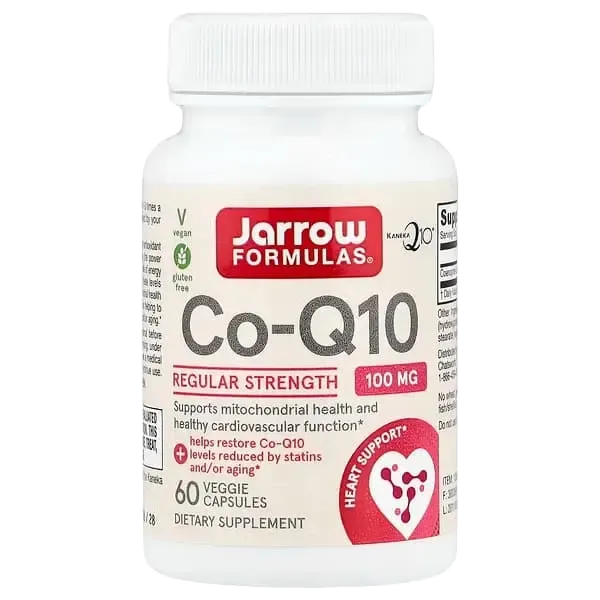
Jarrow Formulas
Jarrow CoQ10 Ubiquinone 100 mg
Ubiquinone (Kaneka Q10) — stable classic CoQ10 form. Cheaper than ubiquinol, great under 40. Supports mitochondria, heart and energy. Take with fatty food.
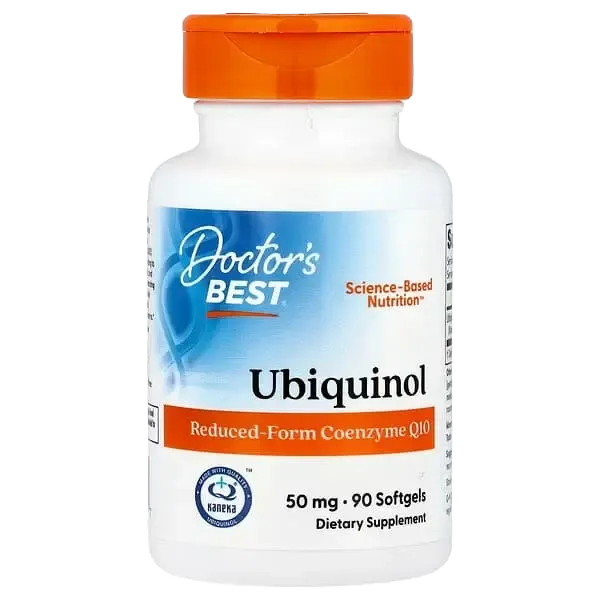
Doctor's Best
Doctor's Best Ubiquinol (CoQ10) 50 mg
Ubiquinol — active CoQ10 form (Kaneka), better absorbed than ubiquinone. Fuel for mitochondria — the cells' power plants. Especially after 40 and on statins.
Jarrow Formulas
Jarrow CoQ10 Ubiquinol 100 mg
Ubiquinol — the active form of CoQ10. Absorbed 3-8 times better than ubiquinone. High 100 mg dose for strong energy and heart support, especially after 40-50.
Sources and studies
Related articles
Iron: how to take it correctly and not cause harm
Iron is a double-edged sword. Deficiency = fatigue, excess = toxicity. Complete guide to forms and doses.
The best nootropics : what really improves memory
We analyze nootropics with an evidence base: Omega-3 DHA, Lion's Mane, Creatine, L-Theanine and Alpha-GPC.
Magnesium for the heart: why cardiologists recommend taurate
Magnesium taurate is the optimal form for the cardiovascular system. Taurine + magnesium = double heart protection.