Collagen for skin: does it work and which one to choose?

🎯 Quick verdict
Hydrolyzed collagen type I, 10-15 g/day. A meta-analysis of 26 RCTs confirms: improvement in skin elasticity and hydration after 8-12 weeks. Marine collagen - smaller peptides, better for the skin. Bullish I+III is universal. ALWAYS with vitamin C 500 mg. Without vitamin C, collagen cannot be synthesized.
Collagen and skin: what science says in 2025
Collagen is the main structural protein of the body. It makes up 75-80% of the dry weight of the skin, forming a framework that provides firmness and elasticity. After 25 years, the body loses approximately1-1.5% of collagen per year. By age 50, only half of the original level remains.
Result: wrinkles, loss of elasticity, dryness, thinning of the skin. And here is the question that worries millions: Is it possible to replenish collagen from the outside?
Science's answer: yes, but with reservations. A 2021 meta-analysis (26 randomized trials, 1721 participants) showed that taking collagen peptides significantly improved skin elasticity, hydration and density. This is not marketing - this is the level of evidence of meta-analysis.
How collagen peptides work
Skeptics say: “Collagen is a protein, it will break down into amino acids in the stomach, and there will be no use.” This is a simplification and does not take into account modern data.
Mechanism 1: Construction material
Hydrolyzed collagen is broken down not into individual amino acids, but into di- and tripeptides (fragments of 2-3 amino acids). The peptides proline-hydroxyproline and hydroxyproline-glycine are absorbed entirely in the intestine and are detected in the blood after 30-60 minutes, and in the skin after a few hours.
Mechanism 2: Signal (main!)
These peptides are perceived by skin fibroblasts as a signal of collagen destruction: “Collagen has broken down - we urgently need to synthesize a new one!” In response, fibroblasts increase the production of type I collagen, elastin and hyaluronic acid. Essentially, you are “tricking” the skin into working harder.
What specific studies show
- 2021 meta-analysis (26 RCTs):Significant improvement in elasticity and hydration when taking 2.5-15 g/day for 8-12 weeks
- Double-blind RCT (2014, 69 women 35-55 years old):2.5-5 g of collagen peptides for 8 weeks - increase in skin elasticity by 15%vs placebo
- Wrinkle Study (2014, 114 women):2.5 g of specific peptides - reduction in the depth of wrinkles around the eyes by 20%after 8 weeks
- Cellulite (2015):2.5 g/day for 6 months - reduces the appearance of cellulite in women of normal weight
Marine vs bovine collagen: detailed comparison
Marine (fish) collagen
Obtained from the skin and scales of fish (tilapia, cod, salmon). Mostly type I collagen is the one that forms the basis of the skin.
- Molecular weight of peptides: 1000-5000 Yes - very small
- Bioavailability:1.5x higher than bovine (small peptides are more easily absorbed)
- For skin: The best choice - small peptides stimulate fibroblasts more effectively
- Taste and smell:Quality - neutral, soluble in water
- Minus:More expensive than bullish by 30-50%
Bovine collagen I + III
From the skins and bones of cows. Contains Type I (skin, bones) and Type III (vessels, organs).
- Molecular weight: 3000-8000 Yes - larger than sea
- Bioavailability:Good, but below sea level
- Universal:Works for skin, bones, joints, blood vessels
- Price:Cheaper than sea
- Brands: Vital Proteins, Great Lakes, Sports Research
Multicollagen: marketing or science?
The “5 types of collagen in one jar” supplements (I+II+III+V+X) are popular on the market. It sounds impressive, but the reality is simpler:
- Type I - makes up 90% of all collagen in the body. This is the basis of skin, bones, tendons
- Type III - 5-10%, vessels and organs. Usually goes along with type I
- Type II - cartilage. Works through a DIFFERENT mechanism (immunomodulation), needed in the form of UC-II (40 mg undenatured), and not in hydrolyzed form
- Types V and X - minor, there are almost no studies on oral administration
Conclusion: type I collagen (marine or bovine) is sufficient for the skin. “5 types” is a marketing ploy, not a scientific advantage. Hydrolyzed collagen type II does not work for joints - it requires UC-II.
Why vitamin C is a must
This is not a recommendation - it is a biochemical necessity. Vitamin C is a cofactor for the enzymes prolyl hydroxylase and lysyl hydroxylase, which cross-link collagen fibers into strong structures. Without vitamin C, collagen physically cannot form normal fibers.
This is why with scurvy (vitamin C deficiency) collagen is destroyed → gums bleed → teeth fall out → wounds do not heal.
Minimum: 200-500 mg of vitamin C along with collagen.
How to take collagen for maximum effect
- Dose: 10-15 g of hydrolyzed collagen per day
- With vitamin C 200-500 mg - a must!
- On an empty stomach or between meals - peptides are better absorbed without competition with other proteins
- Can be added to coffee, smoothies, water - does not collapse at temperatures up to 80°C
- Minimum 8-12 weeksfor visible effect on skin
- For hair and nails: 3-6 months
- Take constantly - after stopping, the effect gradually goes away
Dream combination for skin
- Collagen 10-15 g (marine type I)
- Vitamin C500 mg
- Hyaluronic acid 120-240 mg (hydration from within)
- Astaxanthin 4-12 mg (UV protection, antioxidant)
- Vitamin E200 IU
Take the collagen + C + HA trio together on an empty stomach in the morning. Astaxanthin and E - with fatty foods.
Security
- Collagen peptides are very safe - they are a food product, not a medicine
- Allergies: Extremely rare. If you are allergic to fish, choose bovine. For beef - sea
- Gout: Collagen contains hydroxyproline, which can increase oxalate. In case of urolithiasis - be careful
- Pregnancy:Safe - it's just regular protein
Resume from Novird
Collagen for skin is a supplement that works with meta-analysis level of evidence. Not an instant miracle, but with regular use, after 2-3 months the result is visible in the mirror.
- For skin: Marine collagen type I 10 g + Vitamin C 500 mg
- Universal: Bovine I+III 10-15 g + Vitamin C
- For joints:UC-II 40 mg (different product, different mechanism)
Golden rule: Collagen without vitamin C is money down the drain. Always take together. And remember: 3 months is the minimum period to evaluate the result on the skin.
| Dose | Type | Price | Source | For skin | Peptides | Recommendation |
|---|---|---|---|---|---|---|
| 10 g/day | Marine hydrolyzed I | $$$ | wild fish | ★★★★★ | Small (1-5 kDa) | BEST FOR SKIN |
| 10-15 g/day | Bullish I + III | $$ | Pasture cows | ★★★★☆ | Medium (3-8 kDa) | Universal |
| 10 g/day | Multicollagen (I+II+III+V+X) | $$ | Mixture | ★★★☆☆ | Different | Marketing > science |
| 40 mg/day | UC-II (Undenatured II) | $$ | Chicken cartilage | ★☆☆☆☆ | Not hydrolyzed | Only for joints! |
| 10-15 g/day | Gelatin | $ | Animal | ★★☆☆☆ | Large | Less digestible |
← Прокрутите таблицу вправо →
Recommended products
NOW Foods
NOW Foods UC-II (collagen type II)
Undenatured type II collagen (UC-II) — targeted for cartilage and joints. Small dose (40 mg) works via immune modulation. Type II is the one for joints.
California Gold Nutrition
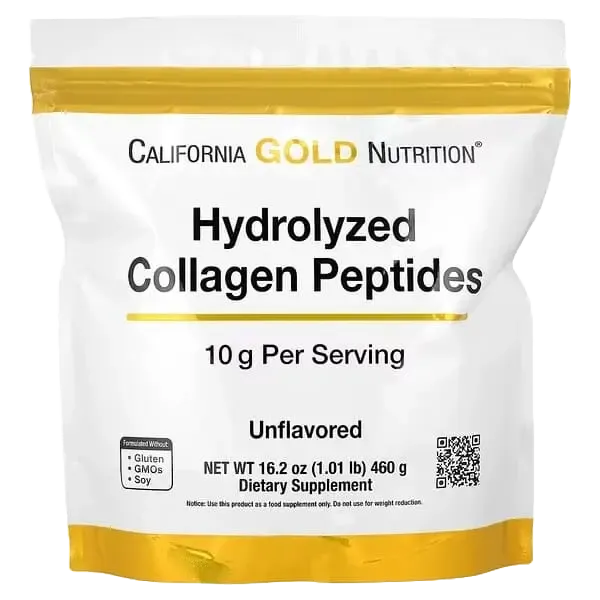
California Gold Collagen Peptides Type I & III
Hydrolyzed type I and III peptides. Type I — skin, bones, ligaments; type III — muscles and vessels. Unflavored powder, easy in a drink. Best price.
California Gold Nutrition
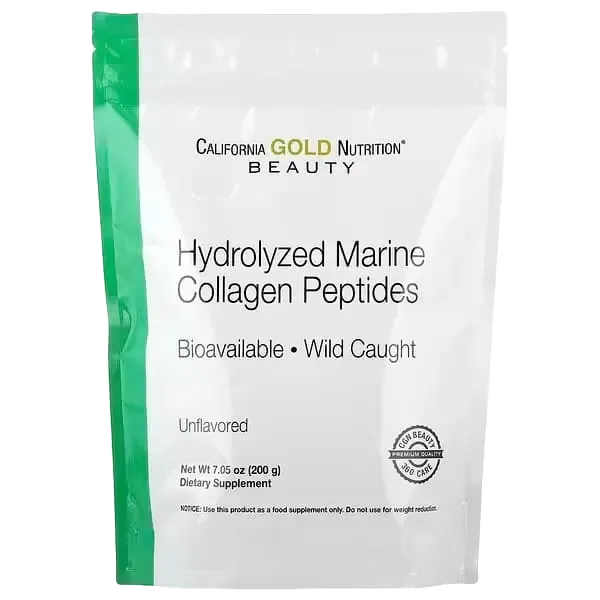
California Gold Marine Collagen
Marine hydrolyzed peptides (type I). Better absorption than bovine, for skin, joints and nails. No fishy smell, dissolves well. Pescatarian-friendly.
Sources and studies
- Effects of Collagen Supplements on Skin Aging: A Systematic Review and Meta-Analysis of Randomized Controlled Trials — The American Journal of Medicine, 2025↗
- Oral Intake of Low-Molecular-Weight Collagen Peptide Improves Hydration, Elasticity, and Wrinkling in Human Skin: A Randomized, Double-Blind, Placebo-Controlled Study — Nutrients, 2018↗
Related articles
Iron: how to take it correctly and not cause harm
Iron is a double-edged sword. Deficiency = fatigue, excess = toxicity. Complete guide to forms and doses.
The best nootropics : what really improves memory
We analyze nootropics with an evidence base: Omega-3 DHA, Lion's Mane, Creatine, L-Theanine and Alpha-GPC.
Magnesium for the heart: why cardiologists recommend taurate
Magnesium taurate is the optimal form for the cardiovascular system. Taurine + magnesium = double heart protection.