
Magnesium for anxiety: which form helps best?

🎯 Quick verdict
For anxiety and sleep - glycinate (bisglycinate): the best evidence base, mild for the gastrointestinal tract, glycine itself calms. For brain fog and cognitive problems - L-threonate. For somatic anxiety (palpitations, tension) - taurate. Magnesium oxide - don't waste your money.
Magnesium and anxiety: why this is not marketing
Magnesium is a cofactor in more than 300 enzymatic reactions in the body, including key processes in the nervous system. The connection between magnesium and anxiety is not a publicity stunt, but a neurobiological fact with a solid evidence base.
At the same time, about 50% of adults in developed countries receive less than the recommended amount of magnesium. Modern diets, stress, and processed foods deplete reserves—and this directly impacts how we respond to anxiety.
How magnesium works in the brain: three mechanisms
1. Blocks NMDA receptors (reduces arousal)
Magnesium ions “plug” the NMDA receptor channel, through which glutamate, the main excitatory neurotransmitter, works. With magnesium deficiency, this “traffic jam” weakens, neurons become more excitable, and the brain works in increased anxiety mode. Simply put: low magnesium → neurons are overexcited → you worry for no reason.
2. Supports the GABA system (increases inhibition)
Magnesium enhances inhibitory GABA transmission and reduces glutamate release. GABA is the main “brake” of the nervous system. The imbalance “GABA ↔ glutamate” towards arousal is precisely associated with anxiety, panic attacks and insomnia.
3. Regulates stress axis (HPA)
Magnesium is involved in regulating the release of cortisol and the body's response to stress. With chronic magnesium deficiency, the HPA axis (hypothalamus-pituitary-adrenal glands) works at increased speed, which creates a vicious circle: stress → magnesium deficiency → even more stress.
What the research actually shows
It's important to be honest: magnesium is a support, not a replacement for therapy for clinical anxiety disorder. But the evidence base is decent for a dietary supplement:
- Systematic review (Nutrients, 2017) - 18 studies: Magnesium significantly improved subjective measures of anxiety, most strongly in people with low levels at baseline
- Meta-analysis (BJPsych Open, 2018)Magnesium supplementation is associated with improved rates of anxiety and depression
- RCT magnesium + B6 (2021) - in highly stressed adults, the combination reduced perceived stress more than placebo
- Sleep meta-analysis (Zhang et al., 2022)moderate but reproducible improvements in insomnia
- L-threonate RCT (2025) - confirmed improvement in cognitive performance and sleep quality at 12-week intake
The main nuance: the effect is maximum in those who initially lack magnesium. If your level is normal, the supplement may not provide a noticeable result.
Which form of magnesium to choose: detailed analysis
1. Glycinate (bisglycinate) - BEST FOR ANXIETY AND SLEEP
The “gold standard” for the nervous system. Chelated form - magnesium is “hidden” inside the glycine molecule, which protects it from destruction in the stomach.
Why is it the best? Glycine itself is an inhibitory neurotransmitter. It lowers body temperature (signal to the brain: it's time to sleep), speeds up falling asleep and improves sleep quality. You get adouble effect: magnesium relaxes + glycine calms.
- Bioavailability: ~80% - one of the highest
- Elemental Mg: ~18% by weight of the compound
- Gastrointestinal tract:very soft, practically does not cause diarrhea
- Dosage: 200-400 mg elemental Mg in the evening
- Price:average
2. L-Threonate (Magtein) - BEST FOR THE BRAIN
Patented form developed by MIT scientists. The only form of magnesiumproven to cross the blood-brain barrier and increase magnesium levels directly in neurons.
Studies have shown improved learning, decreased anxious behavior, and improved cognitive performance. However, there is less clinical data for pure anxietythan for glycinate - here you are largely extrapolating from theory.
- Bioavailability:high for the brain
- Elemental Mg:only ~8% (need high dose by weight)
- Gastrointestinal tract:soft
- Dosage: 1500-2000 mg L-Threonate (= ~144 mg elemental Mg)
- Price:high (×3-5 from glycinate)
3. Taurat / Acetyl taurate - FOR SOMATIC ANXIETY
Magnesium + taurine. Taurine stabilizes cardiomyocyte membranes, regulates calcium channels and calms the heartbeat. Good forpanic attacks with physical symptoms(rapid heartbeat, muscle tension, trembling).
The acetyl taurate form penetrated well into the brain and reduced markers of anxiety in animal studies - but there is little high-quality human data yet.
- Bioavailability:high
- Elemental Mg: ~9%
- Dosage: 200-400 mg elemental Mg
4. Citrate - BUDGET OPTION
It is well absorbed and cheap. But in doses above 300 mg it can cause loosening of stools - it attracts water into the intestines. Not the best choice for anxiety, but suitable for general replenishment of the deficiency.
5. Malate - FOR ENERGY
Magnesium + malic acid (malate). Malate is a participant in the Krebs cycle, the main energy process of cells. It is well tolerated and maintains the level of magnesium in the blood for a long time. Take in the morning as it can invigorate.
6. Oxide - NOT RECOMMENDED
The cheapest and most useless form for the nervous system. Although it contains as much as 60% elemental magnesium by weight, only 4% is absorbed. Out of 400 mg, your body will receive only 16 mg. Used as a laxative and antacid - but not as an anxiety supplement.
Optimal dosage regimen for anxiety
Morning
- L-Threonate 1000 mg - for cognitive calm and clarity
- OR Malate 200 mg - if you need energy without anxiety
Evening (30-60 minutes before bedtime)
- Glycinate 200-400 mgelemental Mg - for relaxation and sleep
Reception rules
- Look at the elemental magnesium on the label, not the total weight of the compound
- Start with a smaller dose, divide into 1-2 doses
- Take with food - reduces the risk of weakness
- Safe ceiling for supplements: ~350 mg elemental Mg per day
- Course: minimum 4-8 weeks to assess the effect on anxiety
- Combine with B6 - in RCT the combination showed the best result under stress
What to combine with for maximum effect
- Vitamin B6 - helps magnesium penetrate cells. 2021 RCT confirms: Mg + B6 reduces stress more than Mg alone
- Ashwagandha KSM-66 (in the morning) - adaptogen, reduces cortisol by 11-32%
- L-Theanine (daytime) - calm concentration without drowsiness
- Omega-3 - reduces neuroinflammation
Do not combine with:
- Calcium and iron - compete for absorption (space for 2+ hours)
- Antibiotics (tetracyclines, fluoroquinolones) - magnesium blocks their absorption
- Levothyroxine - space it out for 4 hours
Magnesium from food
Supplements are not the only way. Good food sources of magnesium:
- Pumpkin seeds - 150 mg per 30 g (champion!)
- Almonds and cashews - 75-80 mg per 30 g
- Dark chocolate (from 70%) - 65 mg per 30 g
- Spinach - 78 mg per 100 g (boiled)
- Avocado - 58 mg per fruit
- Beans, quinoa, whole grains
A diet rich in these products covers a significant part of the norm. Supplements make up the difference.
Safety and side effects
- Diarrhea and cramping are the most common effects, especially from oxide and citrate in large doses. Solution: choose glycinate and split the dose
- Kidney disease - with reduced function, magnesium is excreted worse and accumulates. Admission only under the supervision of a doctor
- Drowsiness - glycinate in the evening may increase drowsiness. This is a plus if the goal is sleep
Important: If anxiety interferes with your life, disrupts sleep, work or relationships, this is a reason to consult a doctor or psychotherapist. Magnesium is an addition to working with a specialist, not a replacement.
Result from Novird
Magnesium is an inexpensive, well-tolerated nervous system support with a real evidence base. For anxiety and sleep, start withglycinate 200-400 mgin the evening, give it 3-4 weeks and evaluate on sleep and well-being. If brain fog and concentration are the main problem, considerL-threonate. For panic attacks with palpitations - taurat.
And remember: magnesium works best in those who lack it. If in doubt, take a test for magnesium in red blood cells (not in serum - it is less informative).
| Form | Price | Action | Elem. Mg | Digestibility | In case of alarm | Gastrointestinal tract |
|---|---|---|---|---|---|---|
| Glycinate (bisglycinate) | $$ | Anxiety, sleep, relaxation | ~18% | High | ★★★★★ | Very soft |
| L-Threonate (Magtein) | $$$ | Cognition, focus, sleep | ~8% | High, goes to the brain | ★★★★☆ | Soft |
| Taurate/acetyl taurate | $$ | Heart, blood pressure, anxiety | ~9% | High | ★★★★☆ | Soft |
| Citrate | $ | General deficit | ~16% | High | ★★★☆☆ | Relaxes |
| Malate | $$ | Energy, fatigue | ~12-15% | High | ★★★☆☆ | Soft |
| Oxide | $ | Constipation, heartburn | ~60% | Very low (~4%) | ★☆☆☆☆ | Greatly laxative |
← Прокрутите таблицу вправо →
Recommended products
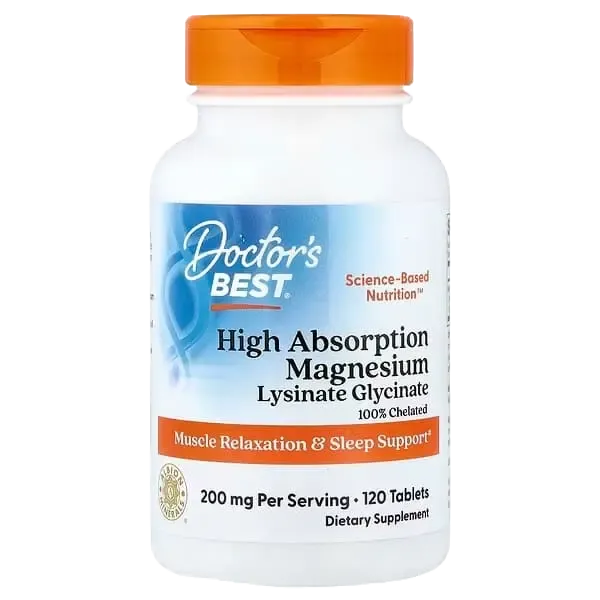
Doctor's Best
Doctor's Best Magnesium Glycinate (chelated)
Chelated lysinate glycinate form (TRAACS®). Reduces anxiety, improves sleep, gentle on stomach. Most versatile form for stress.
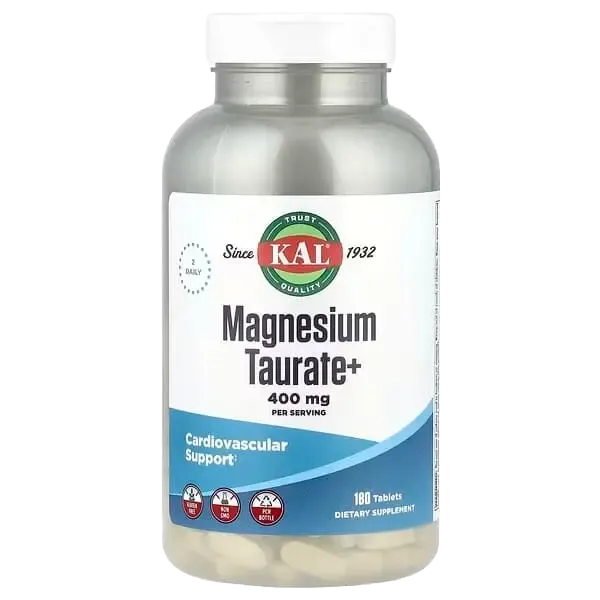
KAL
KAL Magnesium Taurate+
Magnesium taurate — gentle form for relaxation and nervous system. Calm sleep, less muscle tension, doesn't irritate stomach. 50000+ reviews.
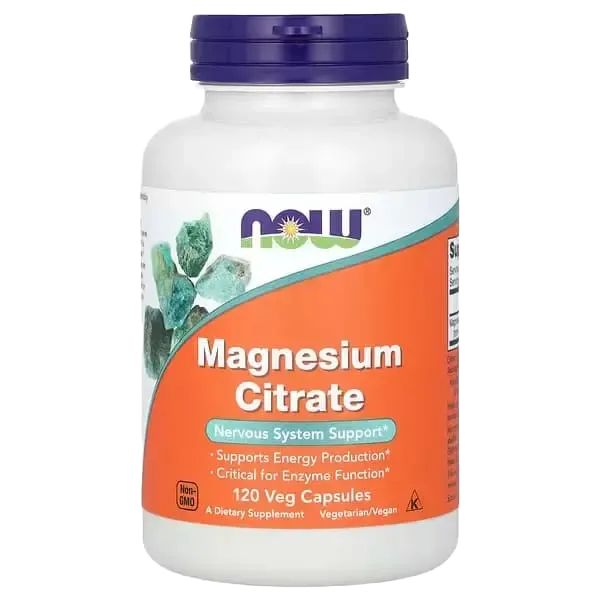
NOW Foods
NOW Foods Magnesium Citrate
Magnesium citrate with good absorption. Muscle relaxation, better sleep, stress relief. Affordable price and large package.
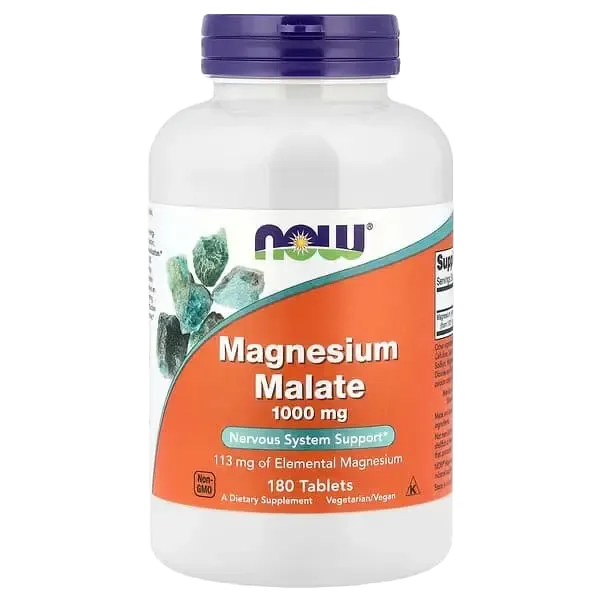
NOW Foods
NOW Foods Magnesium Malate
Magnesium malate (with malic acid). Supports energy and muscles, relaxation. Good for fatigue alongside anxiety.
Sources and studies
Related articles
Iron: how to take it correctly and not cause harm
Iron is a double-edged sword. Deficiency = fatigue, excess = toxicity. Complete guide to forms and doses.
The best nootropics : what really improves memory
We analyze nootropics with an evidence base: Omega-3 DHA, Lion's Mane, Creatine, L-Theanine and Alpha-GPC.
Magnesium for the heart: why cardiologists recommend taurate
Magnesium taurate is the optimal form for the cardiovascular system. Taurine + magnesium = double heart protection.