
Melatonin: how to take it correctly and not cause harm

🎯 Quick verdict
0.3-1 mg is the correct dose (not 5-10 mg as they sell!). Melatonin is not a sleeping pill, but a regulator of circadian rhythms. Works best with jet lag and a shift schedule. 30-60 minutes before bedtime to fall asleep, 3-4 hours to change the rhythm. Courses last 2-4 weeks, not all the time. Magnesium glycinate is better for daily use.
Melatonin: The Most Misused Sleep Supplement
Melatonin is the most popular sleep supplement in the world. And at the same time the most misused. Most people take it in doses that are 10-30 times the physiological norm, at the wrong times and for conditions where it cannot help.
What is melatonin really
Melatonin is a hormone that is produced by the pineal gland (epiphysis) in response to darkness. Its main function is not to put you to sleep, but to signal to the brain that night has come and it’s time to get ready for sleep.
Melatonin is a regulator of circadian rhythms (internal clock), and not a sleeping pill. It does not “turn off” consciousness like benzodiazepines or Z-drugs. It gently shifts the internal clock towards sleep.
Main mistake: too high dose
In stores they sell melatonin in 3, 5 and even 10 mg doses. This is 10-30 times more than the physiological dose. What the research says:
- Physiological dose: 0.1-0.3 mg - raises the level of melatonin in the blood to a natural night peak
- Optimal for most:0.5-1 mg
- 3-10 mg:Creates a supraphysiological level - 10-50 times higher than normal
MIT Study: 0.3 mg of melatonin works as effectively as 3 mgfor speeding up sleep. However, 3 mg is more likely to cause side effects.
Problems of high doses
- Daytime sleepiness - melatonin does not have time to completely break down by morning
- Vivid, disturbing dreams - melatonin increases the REM phase
- Headache
- Decreased own production - the body adapts to external melatonin
- "Rebound insomnia" - if you stop taking it, your sleep may become worse than before taking it
When melatonin really helps
1. Jet lag is the BEST use
This is the most proven use of melatonin. When changing time zones, your internal clock does not match your local time. Melatonin accelerates restructuring from 5-7 days to 2-3.
- Dose: 0.5-3 mg at bedtime local time
- Course: 3-5 days after arrival
- Cochrane Review (12 RCTs): Melatonin significantly reduces jet lag symptoms
2. Shift work schedule
Night shifts disrupt circadian rhythms. 0.5-1 mg before nap helps to fall asleep when the biological clock says "day".
3. Delayed sleep phase syndrome (night owls)
If you can't fall asleep before 2 or 3 a.m., melatonin may move your clock earlier. Butyou need to take it not before bed, but 3-4 hours before the desired time of falling asleep. Dose: 0.3-0.5 mg.
4. Age 55+
With age, melatonin production naturally decreases. A supplement of 0.5-2 mg can compensate for this decrease.
When melatonin will NOT help
- Chronic stress and anxiety - melatonin does not reduce cortisol. Need magnesium, ashwagandha, L-theanine
- Insomnia from pain
- Sleep apnea - you need CPAP, not melatonin
- Poor sleep hygiene - screens before bed, caffeine after lunch, irregular schedule
- Depression - need a doctor
Melatonin vs Magnesium: what to choose for sleep
These are two fundamentally different tools:
- Melatonin - for SPECIFIC situations (jet lag, schedule changes). Courses last 2-4 weeks. Not for regular use
- Magnesium glycinate - for DAILY use. Relaxes, improves sleep quality, and is safe all the time. Does not cause addiction and rebound insomnia
Our recommendation: For daily sleep improvement - magnesium glycinate 200-400 mg. Keep melatonin for jet lag and emergency situations.
How to take correctly
- Dose: Start with 0.3-0.5 mg. Maximum 1 mg. If it doesn’t help, the problem is not melatonin
- For falling asleep:30-60 minutes before bedtime
- To shift the rhythm:3-4 hours before the desired bedtime
- Form: Sublingual (under the tongue) - acts faster. Or regular tablets
- Course: 2-4 weeks, then a break
- Do not combine with alcoholand sedatives
- Darkness is required: Melatonin does not work in bright light. Dim the lights 1-2 hours before bed
Security
- Short-term:Safe in doses up to 5 mg (but more effective than 0.3-1 mg)
- Long-term:There is insufficient data on the safety of use for longer than 3 months
- Children:Do not give unless prescribed by a doctor
- Pregnancy:Contraindicated
- Autoimmune diseases:Melatonin stimulates the immune system - be careful
- Depression:May make symptoms worse in some people
Resume from Novird
- Jet lag: 0.5-3 mg before bedtime local time is the best use
- Falling asleep: 0.3-1 mg 30-60 minutes before bedtime, course 2-4 weeks
- Daily sleep:Magnesium glycinate is better than melatonin
- Less = better: 0.3 mg works the same as 3 mg, but without the side effects
Golden rule: If melatonin 1 mg does not help, the problem is not melatonin. Look for the cause of insomnia: stress, caffeine, screens, routine. Increasing the dose to 10 mg will not solve the problem, but will create new ones.
| Dose | Well | When | Situation | Efficiency |
|---|---|---|---|---|
| 0.5-3 mg | 3-5 days | Before bed local time | Jet lag | ★★★★★ |
| 0.3-1 mg | 2-4 weeks | 30-60 minutes before bedtime | Difficulty falling asleep | ★★★★☆ |
| 0.3-0.5 mg | 2-4 weeks | 3-4 hours before desired sleep | Rhythm shift (owls) | ★★★★☆ |
| 0.5-2 mg | Long-term (with a doctor) | 30 minutes before bedtime | Age 55+ | ★★★★☆ |
| 0.5-1 mg | As needed | Before nap | Shift schedule | ★★★★☆ |
| Won't help | — | — | Chronic insomnia | ★★☆☆☆ (need magnesium/ashwagandha) |
← Прокрутите таблицу вправо →
Recommended products
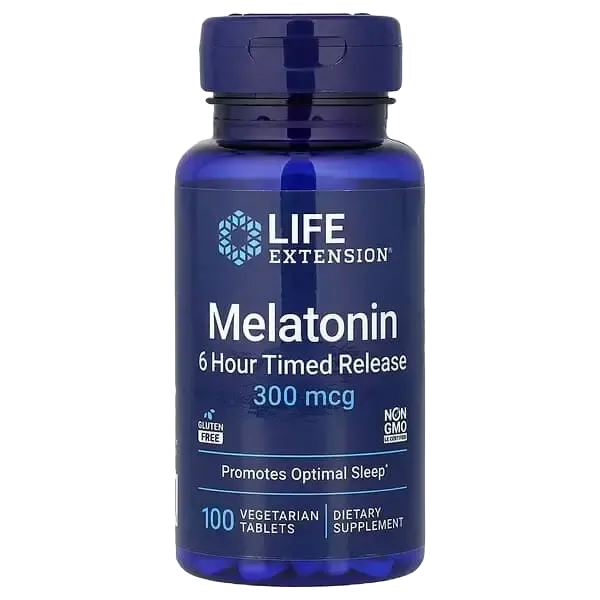
Life Extension
Life Extension Melatonin 300 mcg (timed release)
Low physiological 300 mcg dose with 6-hour release. Ideal to start — no morning grogginess. Meta-analysis confirms: low doses work. NSF purity.
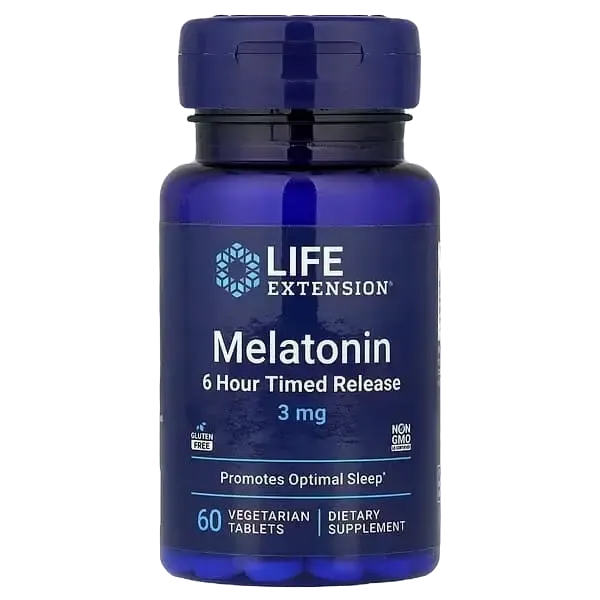
Life Extension
Life Extension Melatonin 3 mg (timed release)
3 mg with 6-hour release — for those who wake at 3 am and can't fall back asleep. Gradual release maintains sleep all night. No morning fog.
Sources and studies
Related articles
Iron: how to take it correctly and not cause harm
Iron is a double-edged sword. Deficiency = fatigue, excess = toxicity. Complete guide to forms and doses.
The best nootropics : what really improves memory
We analyze nootropics with an evidence base: Omega-3 DHA, Lion's Mane, Creatine, L-Theanine and Alpha-GPC.
Magnesium for the heart: why cardiologists recommend taurate
Magnesium taurate is the optimal form for the cardiovascular system. Taurine + magnesium = double heart protection.