Monolaurin: coconut-derived antiviral supplement — what science says
What monolaurin is
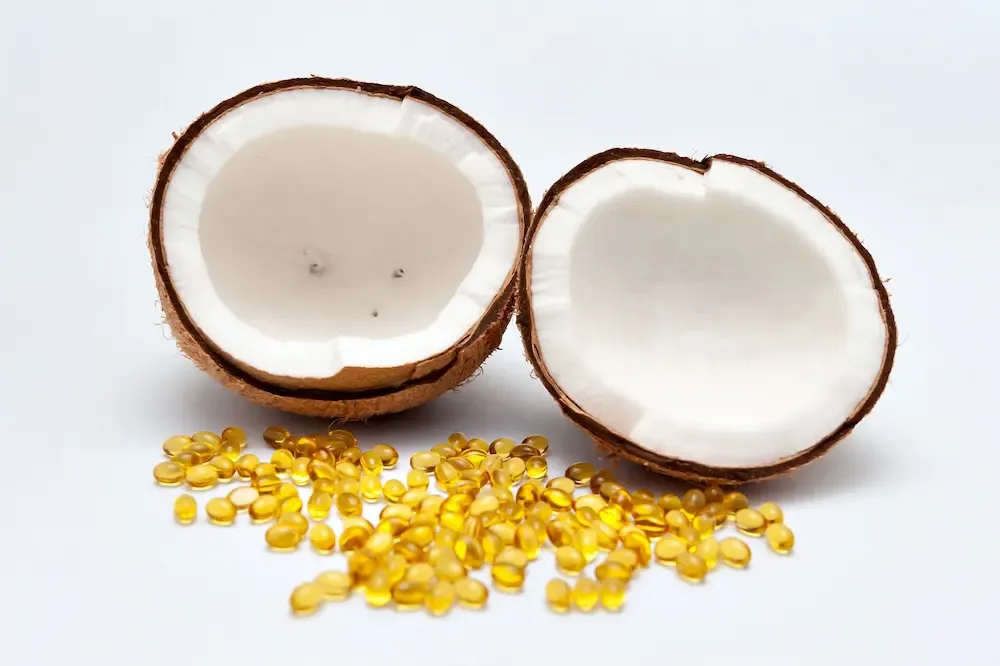
Monolaurin (glycerol monolaurate) is a substance the body produces from lauric acid. Lauric acid makes up to 50% of coconut oil fats and is found in breast milk. Monolaurin is more biologically active than lauric acid itself.
Important: you can't get enough monolaurin directly from coconut oil — that's why supplements are used.
How it works
The main mechanism is disrupting the lipid envelope of viruses and bacteria. Monolaurin embeds into the pathogen's membrane and destabilizes it. That's why it acts specifically on enveloped viruses: herpes, influenza, some coronaviruses.
What we know about monolaurin
Monolaurin's mechanism of action is real and well studied. In lab research it reliably disrupts the lipid envelope of viruses, suppresses resistant bacteria (including MRSA) and Candida fungus. This isn't marketing — it's biochemistry confirmed in the test tube.
Many people take monolaurin during cold season and notice they get sick less often or handle viral infections more easily. Animal studies have also shown a protective effect.
What's still missing — large human clinical trials that would officially confirm these observations. That's why monolaurin is positioned as an immune-support supplement, not a medication. The FDA classifies it as a safe substance (GRAS). If you use it as an addition to immune support — it's a reasonable choice with a clear mechanism of action.
Dosages
There are no generally accepted clinical dosages. Manufacturers and functional medicine practitioners usually recommend:
Prevention: 300–600 mg per day. Active support: from 1500 mg, gradually increasing to 3000 mg 2–3 times a day. Always start with a small dose.
When increasing the dose, pathogen "die-off" symptoms (Herxheimer) are possible — temporary malaise. Take with food.
Forms
Capsules (300–600 mg) — convenient for dosing. Granules/pellets (Lauricidin-style) — higher doses but bitter taste. Some formulas contain added inosine to enhance the effect.
Who should be cautious
Pregnant and breastfeeding women — insufficient data, better to avoid. With coconut allergy — do not take. Monolaurin does not replace vaccination or doctor-prescribed treatment for infections.
Conclusion
Monolaurin is an interesting supplement with a convincing lab base but weak human clinical evidence. It is not a "natural antibiotic," as is often written. As an addition to immune support — a reasonable choice for those who understand the limitations. As a replacement for treatment — no.
Recommended products
Ecological Formulas
Ecological Formulas Monolaurin 600 mg
Monolaurin 600 mg with inosine — the most recommended monolaurin brand. High purity, airtight packaging. Immune support against enveloped viruses.
Nutricost
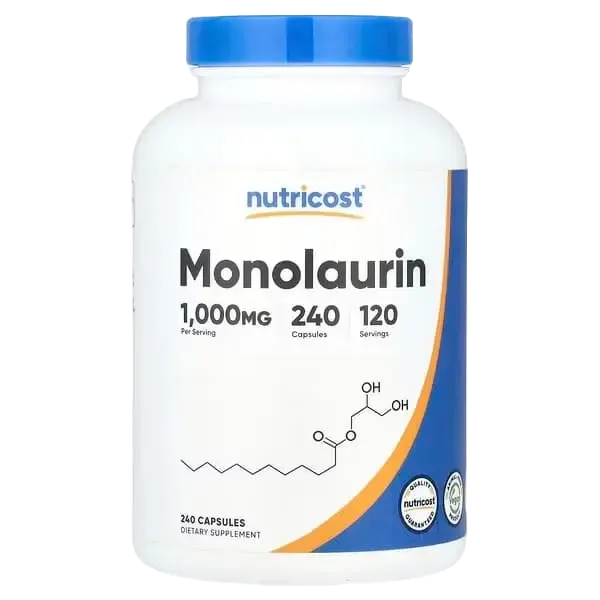
Nutricost Monolaurin 500 mg (240 caps)
Monolaurin 500 mg, large 240-capsule pack — great value for a long course. Clean formula, no unnecessary additives. Best price per capsule.
Ecological Formulas
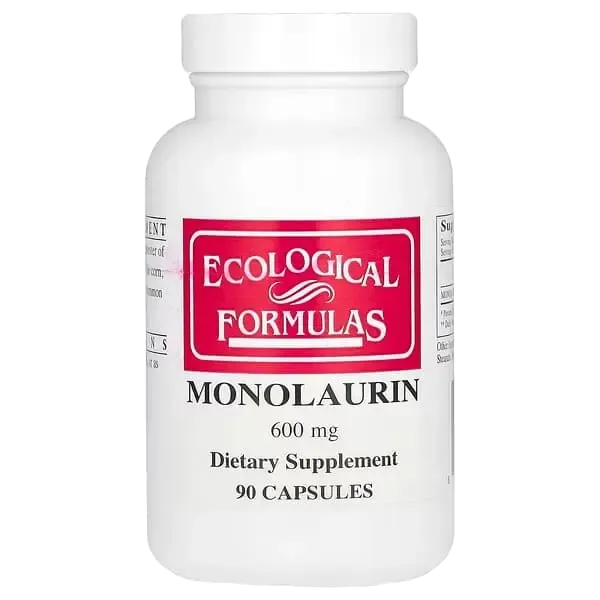
Ecological Formulas Monolaurin 600 mg
Monolaurin 600 mg with inosine from Ecological Formulas — the most recommended monolaurin brand. High purity, airtight packaging. For active support.
Sources and studies
Related articles
Iron: how to take it correctly and not cause harm
Iron is a double-edged sword. Deficiency = fatigue, excess = toxicity. Complete guide to forms and doses.
The best nootropics : what really improves memory
We analyze nootropics with an evidence base: Omega-3 DHA, Lion's Mane, Creatine, L-Theanine and Alpha-GPC.
Magnesium for the heart: why cardiologists recommend taurate
Magnesium taurate is the optimal form for the cardiovascular system. Taurine + magnesium = double heart protection.