Vitamin C: myths and reality - how much you really need
🎯 Quick verdict
500-1000 mg/day is optimal for most. More than 2000 mg is useless - the excess is excreted in the urine. DOES NOT cure a cold, but reduces its duration by 8% and the severity of symptoms. The liposomal form is absorbed 2-3 times better than the usual one. For stress and sports - up to 1000 mg. Smokers have a higher requirement of 35 mg/day.
Vitamin C: the most famous and most misunderstood vitamin
Vitamin C (ascorbic acid) is perhaps the only vitamin that everyone has heard of. It was his grandmother who recommended it for colds, and Nobel laureate Linus Pauling who encouraged it to be taken in grams. But there is a gulf between folk wisdom, marketing and real science.
Vitamin C is truly critical for the body. Without it, scurvy develops - a fatal disease that killed thousands of sailors during the Age of Discovery. But does this mean megadoses will make you healthier? Let's look at what the science says for 2025.
Myth No. 1: Vitamin C cures colds
This is perhaps the most enduring myth in the history of nutritionology. Its main popularizer was Linus Pauling, a two-time Nobel laureate who began taking 18 grams of vitamin C a day in the 1970s and promoted megadoses for the rest of his life.
What does modern science say? Largest meta-analysis (Cochrane, 29 studies, 11,306 participants):
- DOES NOT preventcolds in ordinary people - regular use does not reduce the incidence of diseases
- Reduces the duration of colds by 8% in adults and 14% in children - that is, you are sick for 6 days instead of 7
- Reduces the severityof symptoms - runny nose, cough, sore throat are less pronounced
- Exceptions are athletes and people under extreme stress:regular use for them reduces the risk of colds by 50%
Conclusion: Vitamin C will not cure a cold if you already have it. But regular use can make the illness shorter and easier. And if you are a marathon runner or live under chronic stress, the effect will be more noticeable.
Myth No. 2: The more the better
Linus Pauling took 18,000 mg per day. Many people still believe that megadoses are beneficial. Science says otherwise:
- The absorption of vitamin C falls with increasing dose: at 200 mg ~98% is absorbed, at 500 mg - ~73%, at 1250 mg - ~46%
- Excess is excreted in urine - literally money down the toilet
- Doses above 2000 mg/day may cause diarrhea, nausea and kidney stones (in those susceptible)
- Optimal dose for tissue saturation: 200-400 mg/day
Conclusion: 500-1000 mg per day is the maximum benefit for most people. Divide into 2-3 doses - this way more will be absorbed.
What Vitamin C Really Does: 6 Proven Functions
1. Collagen synthesis
Vitamin C is an obligatory cofactor for enzymes that synthesize collagen. Without it, collagen does not form strong fibers. The result of deficiency: bleeding gums, slow wound healing, fragility of blood vessels. This is why teeth fall out during scurvy.
For skin, joints and blood vessels, vitamin C is no less important than collagen itself. If you are taking collagen peptides, always add vitamin C.
2. Powerful antioxidant
Vitamin C is the main water-soluble antioxidant of the body. It neutralizes free radicals in the aqueous environment of cells (unlike vitamin E, which works in the fatty environment of membranes).
Bonus: Vitamin C regenerates vitamin E, returning it to its active form. They work in pairs.
3. Iron absorption
Vitamin C increases the absorption of non-heme iron (from plant foods and supplements) by 2-3 times. Mechanism: restores Fe³⁺ to Fe²⁺, which is more easily absorbed in the intestine.
Practical advice: If you take iron, always take it with orange juice or take it with 200-500 mg of vitamin C.
4. Adrenal & Cortisol Support
The adrenal glands contain the most vitamin C in the body (50-100 times higher than in the blood). When stressed, they use vitamin C to produce cortisol and adrenaline. Research shows that 1000-2000 mg/day reduces cortisol levels after stressful situations.
5. Immune function
Vitamin C accumulates in immune cells (neutrophils, lymphocytes) in concentrations 10-100 times higher than in blood plasma. It is needed for:
- Migration of neutrophils to the site of infection
- Phagocytosis (absorption of bacteria)
- Interferon production
- Protecting immune cells from their own free radicals
6. Synthesis of neurotransmitters
Vitamin C is involved in the synthesis of norepinephrine, serotonin and dopamine. Deficiency can manifest itself as apathy, fatigue and low mood - even before the symptoms of scurvy appear.
Forms of vitamin C: what to choose
Liposomal Vitamin C - the best form
Vitamin C is enclosed in microscopic liposomes (fat bubbles), which protect it from destruction in the stomach and deliver directly to cells. Bioavailability is 2-3 times higher than regular ascorbic acid.
Pros: Maximum absorption, does not irritate the stomach, you can take large doses without diarrhea.
Cons: Costs 3-5 times more. Not all brands are of the same quality - look for the liposome size.
Buffered forms (sodium ascorbate, calcium ascorbate)
Ascorbic acid neutralized with mineral. The pH is close to neutral - does not irritate the stomach. A good choice for people with gastritis or a sensitive gastrointestinal tract.
Ester-C
The patented form is calcium ascorbate with vitamin C metabolites. The manufacturer claims increased bioavailability, but independent studies show only a slight advantage over regular ascorbic acid.
Ascorbic acid
The cheapest and most studied form. Works, but may irritate the stomach at doses above 500 mg. Solution: take with food and divide into 2-3 doses.
Optimal dosages
- Healthy adult:200-500 mg/day (with food)
- Stress / sport: 500-1000 mg/day
- For colds (first 3 days): 1000-2000 mg/day (divided into 3-4 doses)
- With collagen: 200-500 mg with collagen
- With iron: 200-500 mg with iron
- Smokers: +35 mg/day to baseline (smoking destroys vitamin C)
Key rule: Divide the dose into 2-3 doses - absorption decreases after 200 mg at a time. 500 mg in 2 doses is better than 500 mg in one.
Vitamin C from food: the best sources
- Rosehip - 650 mg per 100 g (champion!)
- Red bell pepper - 190 mg per 100 g
- Black currant - 180 mg per 100 g
- Kiwi - 93 mg per 1 fruit
- Broccoli - 89 mg per 100 g (boiled)
- Strawberry - 59 mg per 100 g
- Orange - 53 mg per 100 g (not a leader, contrary to the myth!)
Interesting fact: Red peppers contain 3.5 times more vitamin C than oranges. But citrus marketing won.
Safety and side effects
- Diarrhea - at doses above 2000 mg (osmotic effect in the intestines). Solution: reduce the dose
- Kidney stones - high doses increase oxalate excretion. If you have a history of oxalate stones - no more than 500 mg/day
- Falsely low glucose levels - may distort the readings of glucometers. Diabetics to take into account
- Hemochromatosis - with excess iron, vitamin C enhances its absorption, which is dangerous
Resume from Novird
Vitamin C is an important, but not a magic nutrient. It won't cure a cold in a day, but it will support immunity, collagen synthesis and protection against oxidative stress.
- Optimal dose: 500-1000 mg/day, divided into 2-3 doses
- Best form: Liposomal (if budget allows) or calcium ascorbate
- Always with collagen and iron - synergy
Golden Rule: 500 mg of vitamin C in two doses will give you more than 2000 mg in one. Absorption decreases with dose - split and win.
| Dose | Form | Price | Digestibility | Recommendation | Gastrointestinal tract |
|---|---|---|---|---|---|
| 500-1000 mg | Liposomal Vitamin C | $$$ | ★★★★★ (2-3 times higher) | BEST CHOICE | Great |
| 500-1000 mg | Sodium/calcium ascorbate | $$ | ★★★★☆ | For sensitive stomach | Good (buffered) |
| 500-1000 mg | Ester-C | $$ | ★★★★☆ | Good option | Fine |
| 200-500 mg at a time | Ascorbic acid | $ | ★★★☆☆ | Budget | Can be annoying |
| 500-1000 mg | Ascorbic acid + bioflavonoids | $ | ★★★★☆ | Good budget | Average |
| As prescribed by a doctor | Intravenous Vitamin C | $$$$ | ★★★★★ (100%) | Medical indications only | No contact |
← Прокрутите таблицу вправо →
Recommended products
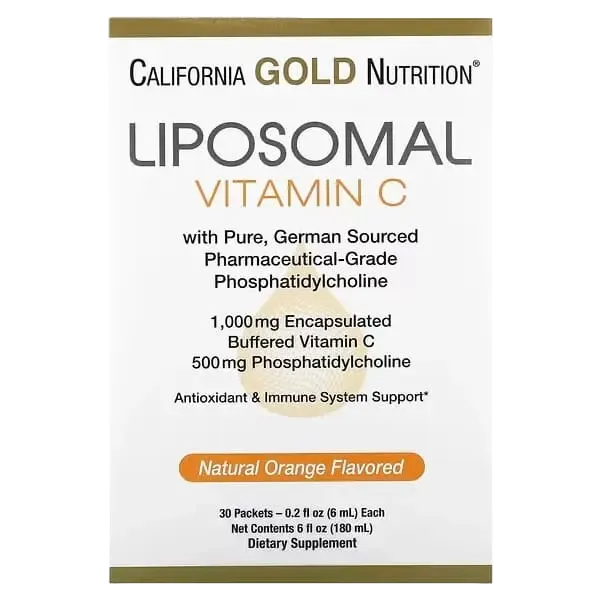
California Gold Nutrition
California Gold Liposomal Vitamin C 1000 mg
Liposomal vitamin C form — maximum absorption, gentle on stomach. Convenient orange-flavored sachets. Immunity, skin, antioxidant.
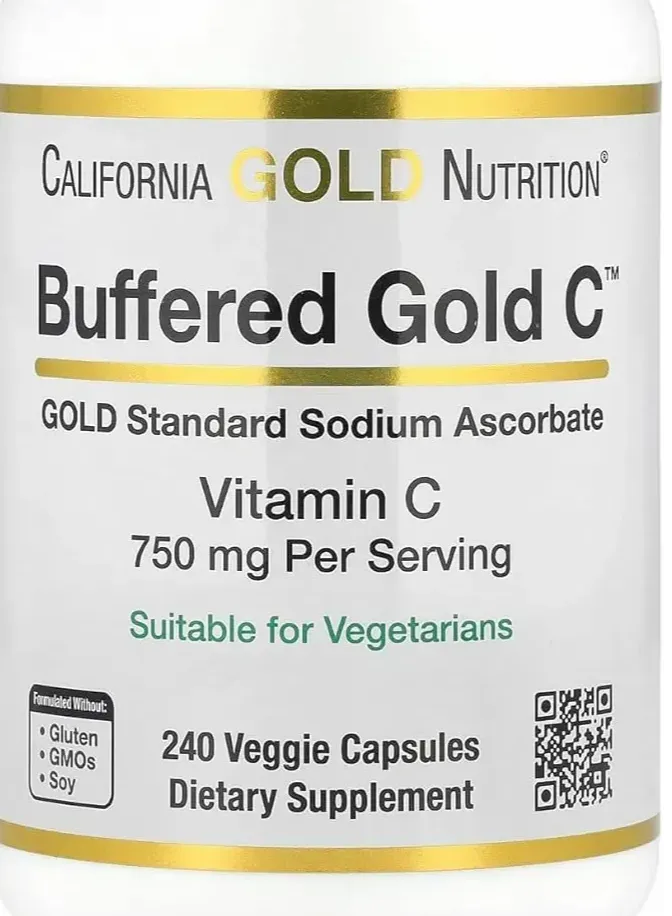
California Gold Nutrition
California Gold Buffered Gold C
Buffered vitamin C (sodium ascorbate) — non-acidic form, doesn't irritate stomach. Suitable for sensitive GI. Antioxidant and immunity.
NOW Foods
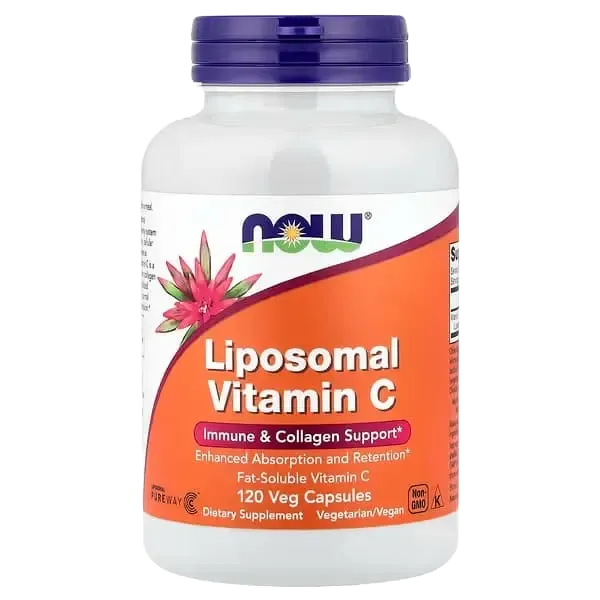
NOW Foods Liposomal Vitamin C
Liposomal vitamin C in capsules — enhanced absorption, gentle on stomach. Convenient capsule size, large package. Immunity and skin.
Frequently asked questions
Does vitamin C help with colds?↓
How much vitamin C do you need per day?↓
Can you overdose on vitamin C?↓
Which form of vitamin C is best?↓
When is it best to take vitamin C?↓
Sources and studies
Related articles
Iron: how to take it correctly and not cause harm
Iron is a double-edged sword. Deficiency = fatigue, excess = toxicity. Complete guide to forms and doses.
The best nootropics : what really improves memory
We analyze nootropics with an evidence base: Omega-3 DHA, Lion's Mane, Creatine, L-Theanine and Alpha-GPC.
Magnesium for the heart: why cardiologists recommend taurate
Magnesium taurate is the optimal form for the cardiovascular system. Taurine + magnesium = double heart protection.