Vitamin D and immunity: why 90% of people take the wrong dose

🎯 Quick verdict
Vitamin D is not a vitamin, but a prohormone. There are receptors in every immune cell. Optimal blood level: 40-60 ng/ml (50-60% of people have a deficiency). Most people need 4000-5000 IU/day D3 rather than the 400-1000 IU of the old recommendations. ALWAYS with K2 MK-7 and fatty foods. Control: 25(OH)D analysis every 6 months.
Vitamin D is a hormone, not a vitamin
The first thing to understand is that vitamin D is not a vitamin in the classical sense. Vitamins are substances that the body cannot synthesize itself. Our body produces vitamin D on its own - from cholesterol in the skin under the influence of ultraviolet radiation. In structure and mechanism of action, it is a prohormone, close to steroid hormones.
Vitamin D receptors (VDRs) are found in virtually every cell of the body—brain, bones, muscles, intestines, and, critically, every cell of the immune system. Vitamin D regulates the expression of more than 200 genes, many of which are directly related to the immune response.
The scale of the problem: pandemic shortages
According to research, vitamin D deficiency (level less than 30 ng/ml) is observed in:
- 40-60%of the population in northern latitudes (above 35° N)
- 70-80%of people with dark skin in the Nordic countries
- 80-90%of elderly people in nursing homes
- 50%+ office workers even in sunny countries
Why? We spend 90% of our time indoors. We use sunscreen. We live in latitudes where from October to March the sun physically cannot provide vitamin D synthesis (the angle of incidence of the rays is too small).
How vitamin D controls immunity
1. T cell activation
T cells are the “special forces” of the immune system. But without vitamin D, theyremain in “sleep” modeand cannot be activated. A study from the University of Copenhagen (2010) showed that T cells are literally unable to respond to pathogens without sufficient levels of vitamin D.
2. Antimicrobial peptides
Vitamin D stimulates the production of cathelicidin and defensins - the body's natural antibiotics. They destroy bacteria, viruses and fungi before the main immune system is activated. This is the first line of defense.
3. Modulation of inflammation
Vitamin D is a powerful immunomodulator. He:
- Reduces the production of pro-inflammatory cytokines (IL-6, TNF-α) - the same ones that cause the “cytokine storm”
- Increases production of anti-inflammatory IL-10
- Prevents overreaction of the immune system (autoimmune damage)
4. Barrier protection
Vitamin D maintains the integrity of epithelial barriers - skin, mucous membranes of the respiratory tract and intestines. It is a physical wall that keeps pathogens out. With D deficiency, barriers weaken and infections penetrate more easily.
What research shows
- BMJ meta-analysis (2017, 25 RCTs, 11,321 participants):Vitamin D intake reduces the risk of acute respiratory infections by 12%. In people with deficiency (less than 25 nmol/l) - by 70%!
- Influenza meta-analysis (2018): D3 reduces influenza incidence by 36%
- COVID-19:Multiple observational studies have shown that patients with D deficiency had a 3-4 times higher riskof severe disease
- Autoimmune diseases:VITAL Study (2022, 25,871 participants, 5 years): D3 reduces the risk of autoimmune diseases by 22%
Why old recommendations (400-1000 IU) are outdated
The recommendation of 400-1000 IU/day was created toprevent rickets, a severe bone disease. This is the minimum for survival, not the optimum for health. For the immune system to function fully, a blood level of 40-60 ng/ml is required, and for this most people require 4000-5000 IU/day.
The Endocrine Society already recommends up to 4000 IU/day for adults. But many doctors still live in the 400 IU paradigm from the 1990s.
D3 vs D2: D3 only
In short: take D3 (cholecalciferol) only.
- D3 is the form that our skin synthesizes. Increases blood 25(OH)D levels 87% more effectivelythan D2
- D2 (ergocalciferol) - plant form. It is less easily absorbed, breaks down faster, and is less stable. The only advantage is that it is suitable for vegans
Why you CAN’T do without K2
This is a critical point that many people miss. Vitamin D3increases the absorption of calciumfrom the intestines. But where will this calcium go?
- With K2:Calcium is sent to bones and teeth (activation of osteocalcin)
- Without K2:Calcium can be deposited in blood vessels (atherosclerosis), kidneys (stones) and soft tissues
Form K2: MK-7 (menaquinone-7) - half-life 72 hours, once a day is enough. 100-200 mcg.
Contraindication: If you are taking warfarin, K2 affects clotting. Discuss with your doctor!
How to take correctly
- Form: D3 (cholecalciferol) + K2 MK-7 in one capsule or separately
- With fatty foods - D3 is fat soluble, without fat absorption is minimal
- Morning or afternoon - D3 may affect melatonin, evening intake may impair sleep
- Control: 25(OH)D analysis after 3 months, then every 6 months
- In winter the dose can be increased by 1000-2000 IU
To whom it is especially important
- People over 50 - the skin synthesizes D 75% less efficiently
- People with dark skin - melanin blocks UV
- Office workers - little sun
- Residents of northern latitudes - October-March synthesis is impossible
- Obese people - D3 gets stuck in adipose tissue
- Vegan - almost no dietary sources of D3
Security
- Ceiling: 10,000 IU/day is considered safe for most (Endocrine Society)
- Toxicity: Extremely rare at doses less than 10,000 IU. Appears at 25(OH)D levels > 150 ng/ml
- The main risk is hypercalcemia (too much calcium in the blood). This is why we need K2
- Granulomatous diseases (sarcoidosis) - D3 can be dangerous. Only under the supervision of a doctor
Resume from Novird
Vitamin D is the only “vitamin” whose deficiency affects more than half of the populationand directly weakens the immune system. This is not a theory - these are dozens of meta-analyses and thousands of studies.
- Take 25(OH)D - find out your level
- Target: 40-60 ng/ml
- D3 4000-5000 IU + K2 MK-7 100-200 mcgwith fatty foods
- Control every 6 months
Golden rule: Don't guess - get tested. It costs 500-1000 rubles and can change your health. D3 technique without level control - shooting blindly.
| Well | Status | Dose D3 | K2 MK-7 | Immunity | Level 25(OH)D |
|---|---|---|---|---|---|
| 8-12 weeks, then retake | DEFICIT | 5000-10000 IU | 200 mcg | Seriously weakened | Less than 20 ng/ml |
| 8 weeks, then retake | Failure | 4000-5000 IU | 100-200 mcg | Weakened | 20-30 ng/ml |
| Constantly | Suboptimal | 2000-4000 IU | 100 mcg | Could be better | 30-40 ng/ml |
| Maintenance | OPTIMAL | 2000 IU | 100 mcg | Maximum protection | 40-60 ng/ml |
| Monitoring | High (OK) | 1000 IU or pause | 100 mcg | Fine | 60-80 ng/ml |
| Urgent calcium control | EXCESS | STOP | — | May cause harm | More than 100 ng/ml |
← Прокрутите таблицу вправо →
Recommended products
Doctor's Best
Doctor's Best Vitamin D3 + K2 MK-7
Vitamin D3 5000 IU (lichen-based, vegan) + K2 (MK-7). K2 directs calcium to bones, not arteries. With coconut MCT for absorption. Immunity and bones.
Thorne
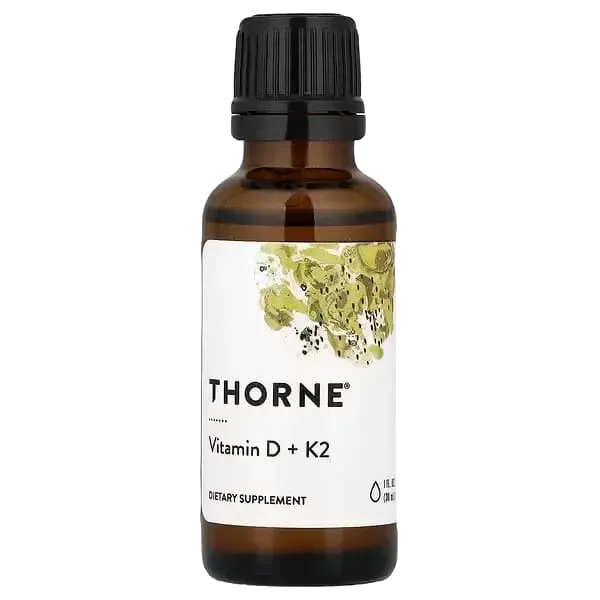
Thorne Vitamin D + K2 (liquid)
Liquid D3 + K2 by Thorne. Convenient drop dosing, NSF certified, clean formula. D3 and K2 together give more benefit for bones and immunity.
Sports Research
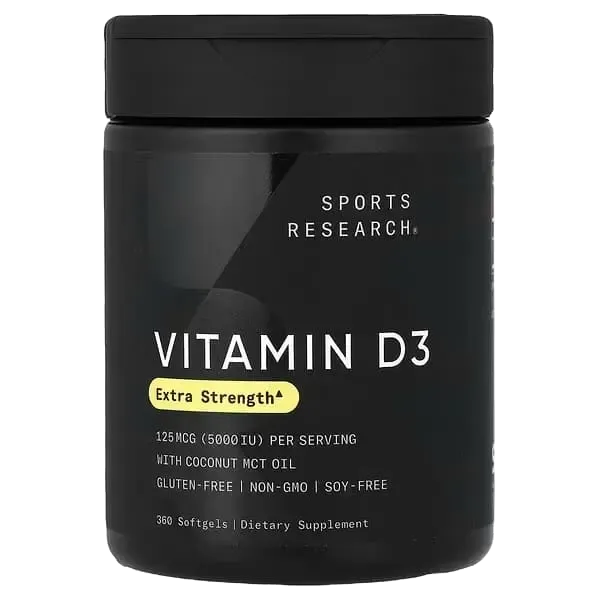
Sports Research Vitamin D3 5000 IU
Plant-based D3 5000 IU without K2. Clean formula, coconut MCT oil for absorption. Large 360-capsule pack — great value for a year. If you take K2 separately.
Frequently asked questions
How much vitamin D should you take per day?↓
When is it best to take vitamin D — morning or evening?↓
Should you get tested before taking vitamin D?↓
Can you overdose on vitamin D?↓
Why take vitamin D together with K2?↓
Sources and studies
- Optimal methods of vitamin D supplementation to prevent acute respiratory infections: a systematic review, dose–response and pairwise meta-analysis of RCTs — Nutrition Journal, 2024↗
- Vitamin D and Respiratory Tract Infections: A Systematic Review and Meta-Analysis of Randomized Controlled Trials — PLoS ONE, 2013↗
Related articles
Iron: how to take it correctly and not cause harm
Iron is a double-edged sword. Deficiency = fatigue, excess = toxicity. Complete guide to forms and doses.
The best nootropics : what really improves memory
We analyze nootropics with an evidence base: Omega-3 DHA, Lion's Mane, Creatine, L-Theanine and Alpha-GPC.
Magnesium for the heart: why cardiologists recommend taurate
Magnesium taurate is the optimal form for the cardiovascular system. Taurine + magnesium = double heart protection.