CoQ10 for the heart: dosages and who should take it
🎯 Quick verdict
Ubiquinol 100-200 mg/day for prevention after 40 years. 200-400 mg for heart failure. MANDATORY when taking statins - they reduce CoQ10 by 40%. Q-SYMBIO Study: 300 mg/day reduced cardiac mortality by 43%.
CoQ10: why the heart cannot live without it
Coenzyme Q10 is a substance that is found in literally every cell of your body. Its main job is to produce ATP (adenosine triphosphate), the body's universal energy currency. And nowhere is CoQ10 needed more than in the heart.
Why? Because the heart isthe only muscle that never rests. It contracts 100,000 times a day, 37 million times a year. To do this, he needs a colossal amount of energy. That is why the concentration of CoQ10 in the heart muscle is one of the highest in the body.
What does CoQ10 do for the heart
1. Energy production for each contraction
CoQ10 works in mitochondria - the “power plants” of cells. It carries electrons in the respiratory chain, ensuring the production of95% of all cellular energy. Without enough CoQ10, the heart literally cannot pump as hard as it needs to.
2. Antioxidant protection
The heart operates under conditions of high oxidative stress - constant consumption of oxygen generates free radicals. CoQ10 is one of the few fat-soluble antioxidantsthat can neutralize these radicals directly inside the membranes of cardiomyocytes.
3. Improvement of endothelial function
Endothelium is the inner lining of blood vessels. When it works correctly, blood vessels dilate and contract normally. CoQ10 improves the production of nitric oxide (NO), a major vasodilator. Result: vessels relax, pressure decreases.
4. Reduced pressure
A meta-analysis of 12 clinical studies showed that taking CoQ10 reduced systolic blood pressure by an average of 11 mm Hg, diastolic blood pressure by 7 mm Hg. This is comparable to some first-line antihypertensive drugs.
Q-SYMBIO Study: A Revolution in Cardiology
This study changed the way cardiologists think about CoQ10. Design:420 patientswith chronic heart failure (NYHA class III-IV). One group received 300 mg of CoQ10 per day, the other received a placebo. Duration: 2 years.
The results shocked the medical community:
- Decrease in mortality from cardiac causes by 43%
- Decrease in overall mortality by 42%
- Reduction in hospitalization rates by 30%
- Significant improvement in functional class (NYHA)
Professor Svend Aage Mortensen, study leader: “This is the first time that CoQ10 supplementation has shown a significant reduction in mortality in heart failure in a randomized trial.”
Statins and CoQ10: a must-have combination
If you take statins (atorvastatin, rosuvastatin, simvastatin) - you need CoQ10. This is not a recommendation - it is a medical fact.
Why do statins deplete CoQ10?
Statins block the enzyme HMG-CoA reductase - it is needed for the synthesis of cholesterol. The problem is that the same enzyme is needed for the synthesis of CoQ10. By blocking one, statins automatically reduce the other.
Result: CoQ10 levels drop by 40-50% within a few months of taking statins.
Symptoms of CoQ10 deficiency with statins:
- Muscle pain and weakness (myalgia) is the most common complaint about statins
- Increased fatigue
- Muscle cramps
- Decreased exercise tolerance
2018 meta-analysis (12 RCTs, 575 participants): CoQ10 supplementation significantly reduced muscle pain in patients on statins.
Ubiquinol vs Ubiquinone: which form is for the heart
Ubiquinol (reduced form)
Active, ready-to-use form. The body doesn't need to convert it - it works immediately. Absorbed 3-8 times better than ubiquinone.
After 40 years, the ability to convert ubiquinone to ubiquinol decreases. Therefore, for people over 40 and for patients with heart disease, ubiquinol is the only choice.
Ubiquinone (oxidized form)
Cheaper, but the body needs to convert it into ubiquinol. In young healthy people (under 35 years of age), this conversion works normally. But for any heart problems - only ubiquinol.
How to choose for a heart?
- You are under 35 years old, have a healthy heart:ubiquinone 100 mg is a normal budget option
- You are 35+, take statins, have heart problems:only ubiquinol 100-300 mg
- Heart failure: ubiquinol 300-400 mg (discuss with a cardiologist)
Dosages for different purposes
- Prevention (40+ years):100 mg ubiquinol per day
- For statins: 200-300 mg ubiquinol per day
- Hypertension: 100-200 mg per day (effect after 4-12 weeks)
- Heart failure: 300-400 mg per day (under medical supervision)
- Athletes: 100-200 mg for recovery
How to take correctly
- With fatty foods - CoQ10 is fat-soluble, without fat absorption is minimal
- In the morning or afternoon - may give a slight energetic effect
- Divide doses above 200 mg into 2 divided doses
- Effect on blood pressure: evaluate after 4-12 weeks
- For heart failure: full effect after 3-6 months
What to combine with for the heart
- Magnesium taurate - support heart rate and blood pressure
- Omega-3 (EPA)—reduces triglycerides and inflammation
- Vitamin D3 + K2 - protects blood vessels from calcification
- L-Carnitine - additional energy for the myocardium (especially in heart failure)
Security
CoQ10 is one of the safest supplements. Even doses of 1200 mg/day did not cause serious side effects in studies.
- Side effects - rare: mild insomnia (take in the morning), gastrointestinal upset
- Warfarin - CoQ10 may slightly reduce the effect of warfarin. Monitor INR
- Chemotherapy - discuss with your oncologist (theoretically, it can also protect tumor cells)
Resume from Novird
CoQ10 is not just an “energy supplement.” For the heart, this is a critically important enzyme, without which normal energy production in cardiomyocytes is impossible.
Three situations when CoQ10 is required:
- Taking statins - ubiquinol 200-300 mg, no options
- Age 40+ - ubiquinol 100 mg for prevention
- Heart failure - ubiquinol 300 mg (Q-SYMBIO study)
Important: CoQ10 is not a replacement for cardiac treatment. This is an addition that can significantly improve the results of the main therapy. Always discuss your appointment with your doctor.
| Dose | Form | Well | When | Situation |
|---|---|---|---|---|
| 100 mg/day | Ubiquinol | Constantly | In the morning with fatty foods | Prevention 40+ |
| 200-300 mg/day | Ubiquinol | While you are taking statins | With food, 2 doses | Taking statins |
| 300-400 mg/day | Ubiquinol | Constantly (with a doctor) | 2-3 meals with food | Heart failure |
| 100-200 mg/day | Ubiquinol | 3-6 months | In the morning | Hypertension |
| 100-200 mg/day | Ubiquinol or ubiquinone | Constantly | Before training | Sports/recovery |
← Прокрутите таблицу вправо →
Recommended products
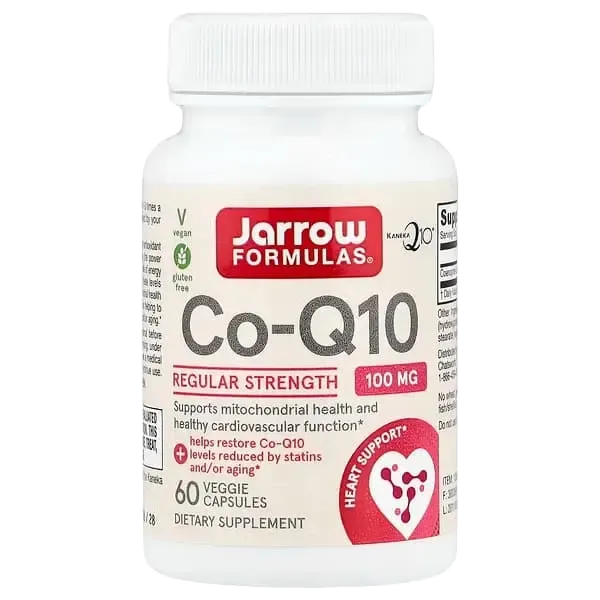
Jarrow Formulas
Jarrow CoQ10 Ubiquinone 100 mg
Ubiquinone (Kaneka Q10) — stable classic CoQ10 form. Cheaper than ubiquinol, great under 40. Supports mitochondria, heart and energy. Take with fatty food.
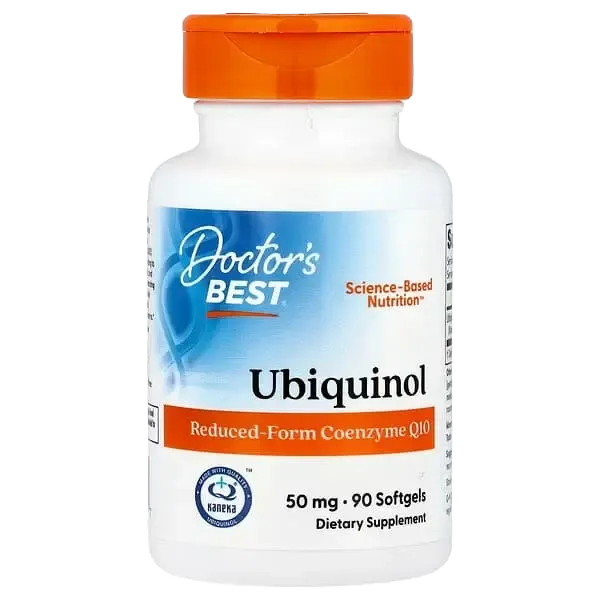
Doctor's Best
Doctor's Best Ubiquinol (CoQ10) 50 mg
Ubiquinol — active CoQ10 form (Kaneka), better absorbed than ubiquinone. Fuel for mitochondria — the cells' power plants. Especially after 40 and on statins.
Sources and studies
- The Effect of Coenzyme Q10 on Morbidity and Mortality in Chronic Heart Failure: Results From Q-SYMBIO: A Randomized Double-Blind Trial — JACC: Heart Failure, 2014↗
- Efficacy and safety of coenzyme Q10 in heart failure: a meta-analysis of randomized controlled trials — Frontiers in Cardiovascular Medicine, 2024↗
Related articles
Iron: how to take it correctly and not cause harm
Iron is a double-edged sword. Deficiency = fatigue, excess = toxicity. Complete guide to forms and doses.
The best nootropics : what really improves memory
We analyze nootropics with an evidence base: Omega-3 DHA, Lion's Mane, Creatine, L-Theanine and Alpha-GPC.
Magnesium for the heart: why cardiologists recommend taurate
Magnesium taurate is the optimal form for the cardiovascular system. Taurine + magnesium = double heart protection.